
Key Takeaways
A capital campaign feasibility study is the single most important diagnostic a nonprofit will run before launching a multi-year, multi-million-dollar fundraising effort. Done well, it tells you whether your goal is real, who will fund it, and what stands between today and a successful campaign close. Done poorly — or skipped entirely — it is the most common reason capital campaigns stall, miss goal, or never publicly launch.
After more than 30 years guiding nonprofit boards through capital campaigns and over 100 consulting engagements with mission-driven organizations, I can tell you the pattern is consistent: organizations that invest in a rigorous feasibility study raise more money, in less time, with less drama. Those who skip it almost always pay the cost later in stalled momentum, board conflict, or a quietly walked-back goal.
This guide is the conversation I have with every executive director and board chair who asks whether they should commission one. It covers what the study actually tests, what it costs, how long it takes, what the interview process looks like, what the final report should contain, and what to do when the answer is "you are not ready yet." It is the guide I wish more boards read before signing the contract.
For broader context on the consulting engagement that surrounds the study, see our capital campaign consultant hiring guide. For the document that drives every donor conversation in the study itself, see our nonprofit case for support guide. For the operating plan that should sit underneath every campaign, see our fundraising plan template.
What a Capital Campaign Feasibility Study Actually Is
Define the study with enough precision that the board, staff, and consultant are all working from the same definition before the contract is signed.
A capital campaign feasibility study is a structured research process — usually three to four months long — designed to test whether a specific fundraising goal is achievable, what conditions would have to be true for it to succeed, and what the organization should change before going public. It is not a marketing study. It is not donor cultivation. It is a stress test of a fundraising hypothesis.
The hypothesis is straightforward: "Our organization can raise X dollars over Y years to fund Z project." The study examines that hypothesis from four angles — the case for support, the donor base, the leadership and governance, and the operational infrastructure — and produces a written report with a recommendation: launch, modify, or wait.
What it is not, and what every board chair should be clear about before commissioning one:
The most common misunderstanding I encounter is the assumption that a feasibility study confirms the campaign will succeed. That is not what it does. It surfaces what is real, what is aspirational, and what is missing — and then the board decides whether the campaign is worth launching given what is now known.
Why Nonprofits Conduct a Feasibility Study
Walk through the five concrete reasons a feasibility study earns its cost, so a board chair can articulate the case to skeptical members and major donors.
The cost of a study (typically $25,000-$50,000 — see fees below) is real money for any organization. Skeptical board members, especially those new to capital campaigns, will sometimes ask whether it is necessary. The answer, in our experience across more than 100 engagements, is yes — for five specific reasons.
Reason 1: It Tests the Goal Against Donor Capacity
The single most common reason capital campaigns fail is that the goal was set based on organizational need rather than donor capacity. A board decides to raise $5 million because that is what the building costs. The feasibility study reveals that the realistic ceiling — given the prospect pipeline, lead-gift potential, and economic conditions — is closer to $3.2 million.
Without the study, the campaign launches at $5 million, stalls at $2.8 million, and either limps to a quietly reduced goal or shuts down. With the study, the goal is reset before public launch, the project is scoped accordingly, and the campaign closes successfully.
The study answers a question your internal team cannot honestly answer: "How much will the top 10 to 15 donors actually commit?"
Reason 2: It Identifies Lead-Gift Prospects
A successful capital campaign raises 50-70% of its total from the top 10-15 donors. Most organizations cannot tell you, with confidence, who those 10-15 donors are. They can name 30-50 high-capacity prospects but cannot tell you which ones are most likely to give at the leadership level, why, or what conditions would have to be true to secure the gift.
The feasibility study identifies and tests these prospects. By the end of the study, you have a working lead-gift table — names, capacity ranges, motivation patterns, and engagement strategies — that becomes the operating playbook for the quiet phase.
Reason 3: It Surfaces Internal Misalignment
Capital campaigns require board members, executive staff, and major donors to be aligned on the project, the goal, and the case for support. They rarely are at the start. The study uses the interview process — both with internal stakeholders and with prospective donors — to surface misalignments that would otherwise blow up mid-campaign.
Common misalignments the study catches:
- Board members who privately disagree with the project but never voiced it in meetings
- Major donors who are skeptical of the executive director's leadership
- Programmatic priorities the community has already moved past while the board is still focused on them
- Financial assumptions that auditors or banks do not actually support
Reason 4: It Builds Donor Engagement Without Solicitation
Although no asks are made during the interviews, the study itself is a sophisticated engagement tool. Donors interviewed in the study feel consulted, valued, and brought into the campaign before being asked to contribute. By the time the cultivation phase begins, the top prospects have already heard the case, raised their objections, and seen them addressed in the report.
In our experience, gifts secured from interview participants close at significantly higher rates and at significantly higher levels than gifts solicited from prospects who were not part of the study. The study pays for itself in this conversion lift alone.
Reason 5: It Produces a Defensible Recommendation
Boards make capital campaign decisions in conditions of high uncertainty and high consequence. A feasibility study produces a written report with a clear recommendation — launch at $X, modify the project, or pause and address specific readiness gaps — that the board can act on, defend to donors, and reference if conditions change.
A board that launches a campaign without a feasibility study is making a multi-million-dollar decision based on hope. A board that launches based on a feasibility report has documented evidence behind every key assumption.
Traditional Feasibility Studies vs. Guided Studies: What Changed
Help boards understand the modern distinction between a traditional standalone feasibility study and the newer guided model — and decide which is appropriate for their context.
The standard model for capital campaign feasibility studies has been roughly the same for 50 years: the consultant interviews 25-40 prospective donors, writes a report, and the nonprofit decides whether to launch. The interviews are confidential, the report is delivered, and the nonprofit then decides whether to engage the consultant for the campaign itself or hire a different firm.
In the last decade, a second model has emerged: the guided feasibility study. In a guided model, the consultant works alongside the executive director, board chair, and development director through the entire study — and the study transitions seamlessly into the campaign without a separate engagement. Some firms have begun calling this a "planning study" or "campaign planning study" to emphasize the operational integration.
Both models have legitimate use cases.
Traditional standalone study works best when:
- The organization wants an independent, third-party assessment with no commercial conflict
- The board is genuinely uncertain whether to pursue the campaign at all
- Multiple consulting firms are being evaluated for the campaign itself
- The internal development team has the capacity to act on the report independently
- The board has already decided in principle to pursue the campaign and wants to test scope and timing
- The internal team has limited capacity to translate findings into action
- Continuity of relationships with interviewed donors is a priority
- Speed-to-launch matters and re-onboarding a new firm would slow momentum
In our practice, we more often recommend the guided model for organizations under $5 million in annual revenue and the traditional standalone model for organizations with development infrastructure that can act on a report independently. The right answer depends on internal capacity and board preference, not industry convention.
The Five Components of a Rigorous Feasibility Study
Detail the five elements every credible feasibility study must contain, so boards can evaluate proposals and identify gaps in shortcut studies.
A complete feasibility study tests five things. A study that omits any of them is incomplete and should be rejected as a deliverable.
Component 1: Case for Support Testing
The study presents the proposed case for support — the narrative document explaining why the project matters, why now, and why this organization — to 25-40 prospective donors and tests their reaction. The report should document, in detail, where the case landed, where it fell flat, and what language donors used to articulate the project back in their own words.
If the case for support has not been written before the study begins, this is a red flag. A study without a case to test is testing an idea, not a campaign. Before commissioning the study, the case for support — even in draft form — must exist. See our nonprofit case for support guide for the structure that produces a testable document.
Component 2: Prospect Capacity and Inclination Testing
The study identifies and tests the financial capacity and giving inclination of the top 50-100 prospects. For the top 10-20, this should produce specific gift-range estimates: this donor will likely give $X under conditions Y. For the broader pool, the report should classify prospects by capacity tier, engagement level, and recommended cultivation strategy.
A study that produces a generic "donor base is sufficient" conclusion without naming specific prospects, capacity ranges, and engagement plans is not testing prospects — it is making assertions.
Component 3: Leadership and Volunteer Testing
The study assesses whether the board, executive director, and campaign volunteer leadership are positioned to lead a successful campaign. This includes testing how donors perceive the executive director, whether board members are seen as credible peer solicitors, and whether specific community leaders should be recruited to chair the campaign or campaign committees.
Boards often find this section uncomfortable because it surfaces honest external assessments of internal leadership. That discomfort is exactly why the study is valuable — it provides ground truth that the board cannot obtain through internal conversations alone. For more on what nonprofit boards must own in fundraising, see our 10 basic responsibilities of nonprofit boards and our nonprofit board roles and responsibilities guide.
Component 4: Infrastructure and Operational Readiness
The study evaluates the organization's operational readiness to run a multi-year campaign alongside its existing programs. This includes the development office's capacity (staffing, systems, donor database), the financial controls and audit posture, the project's design-readiness and budget integrity, and any legal or zoning approvals that must be in place before donors will commit.
Campaigns frequently stall because the organization secured the lead gift, accepted the pledge, and then discovered six months later that the project's permitting, design, or budget was not actually ready. The study catches these gaps before they become public commitments.
Component 5: A Specific Recommendation
The study must produce a written recommendation with three possible outcomes:
A study that delivers data without a recommendation is incomplete. The board hired the consultant in part for the judgment that synthesizes the data into a clear path forward.
The Step-by-Step Feasibility Study Process
Walk through what a feasibility study actually looks like in practice, so the board chair can set expectations with the rest of the board and staff.
A typical feasibility study unfolds across six phases. Timelines are approximate; complex studies or large interview pools extend the schedule.
Phase 1: Preparation (3-5 weeks)
Before any interviews are conducted, the consultant works with the executive director, board chair, and development director to:
- Refine the draft case for support so it is ready to test
- Build the interview list — typically 25-40 prospective donors, board members, and community leaders
- Develop the interview protocol — the set of questions every interviewee will be asked
- Confirm interview logistics — scheduling, format (in-person, video, phone), and confidentiality protocols
- Draft and send the introduction letter from the executive director or board chair
Phase 2: Interview Scheduling and Outreach (3-4 weeks)
The consultant or a designated coordinator schedules the interviews. Acceptance rates vary. In healthy donor relationships, 70-85% of invited interviewees agree to participate. In organizations with weak donor engagement, acceptance rates can be lower — itself a finding the report should address.
Phase 3: Interviews (4-8 weeks)
Each interview lasts 45-60 minutes. The consultant — never the executive director or development staff — conducts the interview using the protocol established in Phase 1. The interviewer maintains the same questions across interviews to enable pattern analysis but allows space for follow-up where the interviewee opens an unexpected door.
Interviews are conducted in confidence. The consultant agrees not to attribute specific comments to specific donors in the report. This confidentiality is what allows donors to be candid — they will tell a third-party consultant things they will not tell the executive director directly.
Phase 4: Analysis and Pattern Identification (2-3 weeks)
The consultant reviews all interview notes, identifies patterns across responses, cross-references prospect capacity research with stated giving inclinations, and develops the working lead-gift table and the campaign feasibility assessment.
This is the phase where experience matters most. A consultant who has run 50+ studies will see patterns that a less-experienced consultant will miss — quiet skepticism that signals real risk, enthusiastic endorsement that does not translate into giving capacity, recurring themes that suggest a case adjustment.
Phase 5: Draft Report and Internal Review (2 weeks)
The consultant delivers a draft report to the executive director and board chair. This is the appropriate moment for clarifying questions, fact-checking, and ensuring the report's recommendations are grounded in the data. It is not the moment to soften findings the leadership finds uncomfortable. A report that has been sanitized to spare leadership feelings has lost its diagnostic value.
Phase 6: Final Report and Board Presentation (1-2 weeks)
The consultant presents the final report to the full board, walks through the methodology, the findings, and the recommendation, and answers questions. This presentation typically lasts 60-90 minutes and is the most important board meeting of the entire campaign cycle. It is the moment the board decides — informed by external research — whether to launch.
Allocate three to four months for the full study. Studies compressed below twelve weeks tend to under-sample, under-analyze, or both.
What a Capital Campaign Feasibility Study Costs in 2026
Provide concrete, current fee ranges and a framework for evaluating cost against campaign goal so boards can make an informed budget decision.
Standalone capital campaign feasibility studies in 2026 typically cost between $25,000 and $50,000. The variation depends on five factors:
| Factor | Effect on Fee |
|---|---|
| Number of interviews | Each additional interview adds preparation, scheduling, and analysis time |
| Geographic dispersion of interviewees | National interview pools cost more than locally concentrated ones |
| Complexity of the case | Multi-program campaigns require more case-testing |
| Consultant experience | Senior practitioners with 20+ year track records command higher fees |
| Travel requirements | In-person interviews still produce richer data than video, but cost more |
Mid-size nonprofits running a $3-10 million campaign should expect the study itself to cost between $30,000 and $45,000. Small organizations running a $1-3 million campaign can sometimes complete a smaller-scope study for $20,000-$28,000. Large organizations running campaigns of $25 million or more will typically pay $45,000-$75,000 or more for a study with proportionate interview depth.
What the Fee Includes
A complete fee for a standalone study should cover:
- All preparation work (case refinement, interview list, protocol design)
- All interview scheduling, conducting, and notetaking
- Prospect capacity research on the top 50-100 names
- Pattern analysis and synthesis
- A written final report (typically 25-50 pages)
- A live presentation of the findings to the board
- One round of revisions to the report based on board feedback
For a comparable view of consulting fees across the entire nonprofit field, see our nonprofit consultant cost guide. For consultant fee benchmarks specifically tied to capital campaigns, see our capital campaign consultant hiring guide.
The Percentage-Fee Red Flag
The Association of Fundraising Professionals (AFP) Code of Ethics explicitly discourages compensation tied to a percentage of funds raised. Any consultant who proposes a percentage-based fee for a feasibility study — for example, "we will conduct the study for 1% of the campaign goal" — should be disqualified immediately. This pricing model creates ethical conflicts: the consultant has a financial incentive to recommend launch, to recommend a higher goal, and to skew the analysis toward outcomes that grow the eventual fee. Reject this model on principle.
Cost as a Percentage of Goal
A useful sanity check: the feasibility study should cost between 0.5% and 1.5% of the proposed campaign goal.
| Campaign Goal | Reasonable Study Fee Range |
|---|---|
| $1-3 million | $20,000-$30,000 |
| $3-10 million | $30,000-$50,000 |
| $10-25 million | $40,000-$75,000 |
| $25 million+ | $60,000-$100,000+ |
Studies priced below 0.3% of the goal are usually under-scoped. Studies priced above 2% of the goal should be challenged on what is included.
Timeline Reality: How Long the Study Actually Takes
Set realistic expectations on duration, including the parts of the timeline boards routinely underestimate.
The conventional answer is "three to four months," and that is correct for the active study period. The full timeline from first conversation about commissioning a study to a board ready to vote on launch is closer to five to six months.
| Phase | Duration |
|---|---|
| Consultant selection and contracting | 4-6 weeks |
| Preparation (case refinement, list-building, protocol) | 3-5 weeks |
| Interview scheduling and outreach | 3-4 weeks |
| Interviews | 4-8 weeks |
| Analysis and pattern identification | 2-3 weeks |
| Draft report and review | 2 weeks |
| Final report and board presentation | 1-2 weeks |
| Board deliberation and vote | 2-4 weeks |
This timeline assumes the case for support already exists in draft form. If the case has not yet been written, add another 6-10 weeks to develop a testable draft before the study even begins. For the structure that produces a defensible case, see our nonprofit case for support guide.
The most common timeline failure I see is leadership commissioning a study in September with the expectation of a public launch by January. That is not enough time. The study itself can be completed in that window, but the post-study work — adjusting the goal, securing lead gifts in the quiet phase, building the volunteer leadership structure — typically requires another 12-18 months before public launch.
Plan for at least 18 months from the day you commission the feasibility study to the day you publicly announce the campaign. Organizations that try to compress that timeline either skip steps or watch their campaigns stall.
Inside the Interview: How Donors Are Actually Asked
Demystify the feasibility interview, since most board members have never participated in or observed one.
Every feasibility study lives or dies on the quality of its interviews. A well-conducted interview produces honest, actionable intelligence. A poorly conducted one produces polite, useless data. The difference is almost always in how the interviewer asks the questions.
Sample Interview Protocol
A representative interview protocol covers six areas. The exact wording varies, but the structure is consistent across rigorous studies.
1. Awareness and Engagement
- How would you describe [Organization]'s mission in your own words?
- How did you first become connected to [Organization]?
- How would you describe your current relationship with the organization?
- The organization is considering a $X campaign for [Project]. What is your initial reaction to that?
- Which elements of the project resonate most with you? Which raise questions?
- If a friend asked you "Why is this project worth supporting?", how would you answer?
- How would you describe the executive director's leadership of the organization?
- How would you describe the board's effectiveness?
- Are there leadership changes you would expect to see before a campaign of this scale?
- If the organization were to undertake this campaign and ask for your support, what range of gift might you consider — without committing — at this stage?
- What conditions would have to be true for you to consider a leadership-level gift to this campaign?
- Who else in this community should be talking to about this project?
- Who do you see as the natural lead donors for a campaign of this scale?
- What concerns or hesitations would you want the board to know about before launching?
- Is there anything I have not asked that you think is important?
What Skilled Interviewers Do Differently
The mechanics of the protocol matter, but the interviewing skill matters more. Experienced study interviewers do four things consistently that less-experienced interviewers miss:
For donors who emerge from the study as priority leadership prospects, see our major gifts fundraising guide for the cultivation framework that converts study participation into campaign commitments.
What the Final Report Should Contain
Equip boards to evaluate the deliverable they are paying for, since most have never read a feasibility report and do not know what to expect.
A complete final report runs 25-50 pages and contains, at minimum, ten sections. If a section is missing from a draft you receive, ask the consultant to add it before signing off.
A report that delivers data without a recommendation has stopped short. A report that delivers a recommendation without data is asserting. A complete report does both, with the analytical chain visible from interview to conclusion.
What "Launch," "Modify," or "Pause" Actually Means
Translate the report's three possible outcomes into the operational decisions a board has to make in each scenario.
In our experience, the recommendations break down roughly evenly across the three categories: about a third of studies recommend immediate launch, a third recommend modification, and a third recommend pausing to address readiness gaps.
Launch
A "launch" recommendation does not mean "go public next week." It means the data supports a successful campaign at the recommended goal and timeline, provided pre-launch conditions are met. Typical pre-launch conditions include:
- Securing lead gifts totaling 30-50% of the goal in the quiet phase
- Recruiting a campaign chair or co-chairs with the standing to lead
- Closing identified gaps in development staffing or systems
- Completing project design or permitting work that donors flagged
Modify
A "modify" recommendation means the data does not support the proposed campaign as designed but does support a modified version. Common modifications include:
- Reducing the goal by 20-40% to match donor capacity
- Phasing the project, with the campaign funding only Phase 1
- Deferring components that did not test well (often program endowments or technology infrastructure)
- Extending the timeline to allow lead-donor cultivation to mature
Pause
A "pause" recommendation means the data does not support a campaign at this time, regardless of scope. The study identifies specific readiness gaps and a recommended timeline for addressing them. Common pause triggers include:
- Insufficient lead-gift prospects within reach
- Recent or pending leadership transitions that need to stabilize
- Major program controversy or community-relations issues
- Operating deficits or audit findings that undermine donor confidence
- A case for support that did not test well and needs significant rework
After the Study: What Happens Next
Outline the next-12-month operational priorities, since the study is the diagnosis and the campaign is the treatment.
Whatever the recommendation, the study produces a clear set of next steps. For organizations cleared to launch, the priorities for the first 12 months are sequenced and concrete:
For organizations recommended to modify, the priority is reframing the project and the case before re-engaging donors. For organizations advised to pause, the priority is the readiness work — the leadership stabilization, the financial cleanup, the donor cultivation that must happen before a campaign is feasible.
For the operational systems that translate study findings into campaign execution, see our donor stewardship plan guide and our nonprofit fundraising strategy guide.
When a Feasibility Study Is Not the Right Move
Acknowledge that not every nonprofit needs one, and identify the specific scenarios where the cost is not justified.
The honest answer to "do we need a feasibility study?" is sometimes no. There are three scenarios where the standard study is not the right tool:
Small Campaigns Under $1 Million
For a campaign goal below $1 million — typically a small renovation, a single program endowment, or a vehicle replacement — a $25,000-$30,000 feasibility study is disproportionate. Smaller campaigns can often use a "mini-study" approach: 10-15 conversations, conducted by a consultant in a four- to six-week engagement, at a cost of $7,500-$15,000.
Recently Studied Donor Bases
If the organization conducted a thorough feasibility study within the last two years for an unrealized campaign, the existing data may still be largely valid. A targeted refresh — a 10-15 interview update focused on what has changed — can substitute for a full study at one-third the cost.
Pre-Existing Lead-Gift Commitments
If the campaign already has 50%+ of the goal verbally committed from a small number of major donors before any study has been conducted — usually because of a transformational lead gift or a board-led pre-cultivation effort — a traditional feasibility study has limited additional value. A scoped engagement focused on the remaining 50% of the goal and the project execution risks is more useful.
These exceptions are real but narrow. The default for any organization considering a campaign of $1 million or more, with a donor base that has not been recently tested, is to commission a full study.
The Five Mistakes Boards Make with Feasibility Studies
Surface the recurring failure patterns so the board chair can pre-empt them in committee discussion.
Across more than 100 nonprofit consulting engagements, five mistakes recur. None of them are obvious in advance. All of them are preventable.
Mistake 1: Hiring the Cheapest Bidder
A $15,000 study and a $40,000 study are not the same product. The cheap study typically under-samples (10-15 interviews instead of 25-40), uses junior interviewers, and produces a shorter, less rigorous report. The downstream cost of acting on inadequate data dwarfs the initial savings. Treat the fee as a long-term investment in campaign discipline.
Mistake 2: Letting the Executive Director Conduct the Interviews
The executive director cannot conduct a credible feasibility study. Donors will not be candid with the person whose leadership is being assessed. Even if the executive director is highly skilled, the data quality drops materially when the person being evaluated is the person asking the questions. This is non-negotiable.
Mistake 3: Skipping the Case for Support Step
Some organizations attempt to commission a feasibility study before drafting a case for support, hoping the study will surface what the case should say. This conflates two different deliverables. The case must exist in draft form to be tested. Without it, the interviews drift into general engagement conversations and produce shallow data. See our case for support guide for the structure that produces a testable draft.
Mistake 4: Sanitizing the Findings
Boards sometimes pressure consultants to soften findings that reflect poorly on leadership, the project, or specific donors. Every dollar spent on a sanitized report is wasted. The whole point of the study is to surface what the internal team cannot say. A consultant who agrees to soften findings has stopped doing the work the board hired them to do.
Mistake 5: Treating the Recommendation as Optional
A board commissions a feasibility study, receives a recommendation to pause, and decides to launch anyway. This happens. It almost never ends well. If the board is going to ignore the recommendation, the study was a waste of money. The proper response to a recommendation a board does not like is to interrogate the data, not override the conclusion.
Frequently Asked Questions
How much does a capital campaign feasibility study cost in 2026? Standalone studies typically cost between $25,000 and $50,000, with most mid-size nonprofit studies (campaigns of $3-10 million) falling in the $30,000-$45,000 range. Smaller-scope studies for campaigns under $3 million can sometimes be completed for $20,000-$28,000. Studies for campaigns of $25 million or more typically run $45,000-$75,000 or more.
How long does a capital campaign feasibility study take? The active study period — preparation through final report — typically runs three to four months. The full timeline from commissioning the study to a board ready to vote on launch is closer to five to six months. If the case for support has not yet been drafted, add another 6-10 weeks before the study can begin.
How many people are interviewed in a feasibility study? Standard studies include 25-40 interviews. Smaller studies for campaigns under $1 million may include only 10-15. Larger studies for transformational campaigns of $25 million or more may include 50 or more interviews. The interview pool is mixed: prospective major donors, current and former board members, key community leaders, and select staff.
Who should conduct the interviews? An external consultant — never the executive director, development director, or board members. Donors are more candid with a confidential third party who is not part of the organization being evaluated. This is the single most important methodological decision in the study.
What is the difference between a feasibility study and a planning study? The terms are increasingly used interchangeably, though "planning study" usually signals a guided model in which the consultant continues into the campaign itself rather than producing a standalone deliverable. A traditional standalone feasibility study is independent of the campaign engagement; a planning study integrates the two. Both are legitimate models with different use cases.
Should we do a feasibility study if we already have a major lead gift? If a single transformational gift has already been committed verbally for 50%+ of the goal, a traditional feasibility study has limited additional value. A scoped engagement focused on the remaining donor base and the project's execution risks is more useful. For campaigns where the lead gift is not yet secured, a full study remains the standard.
What if the feasibility study recommends we pause the campaign? A pause recommendation is not a failure — it is a saved campaign. Treat it as a 12-24 month roadmap for addressing the specific readiness gaps the report identifies. Organizations that launch despite a pause recommendation almost always wish they had not. Re-test feasibility once the readiness work is complete.
Can a feasibility study guarantee the campaign will succeed? No. The most rigorous study cannot eliminate every risk. What it does is dramatically reduce the unknowns: the realistic goal range, the lead-gift prospects, the leadership credibility, the operational gaps. A campaign launched with a thorough feasibility study has a substantially higher probability of success than one launched without — but no consultant should ever guarantee a specific outcome.
Should the feasibility consultant also run the campaign? Both models are legitimate. A guided study transitions seamlessly into the campaign and preserves donor relationships built during the interviews. A traditional standalone study allows the board to evaluate multiple firms for the campaign engagement separately. The right answer depends on internal capacity, board preference, and the consultant's relationship pattern with interviewees.
What if our case for support has not been written yet? The case must exist in at least draft form before the feasibility study begins. A study without a case is testing an idea, not a campaign. Build a draft case for support first — see our nonprofit case for support guide for the structure — and only then commission the study.
How Giddings Consulting Group Approaches Feasibility Studies
Giddings Consulting Group has led capital campaign feasibility studies for nonprofit organizations across human services, faith communities, education, healthcare, and arts and culture sectors. Our practice is grounded in three commitments.
First, rigor over speed. We do not compress the interview phase to meet artificial deadlines. The study takes the time it takes.
Second, independence over diplomacy. We deliver findings as the data shows them. We will not soften a recommendation to spare a board chair or executive director discomfort. The board hired us for honest analysis, not for managed perceptions.
Third, operational utility. Our reports are written to be acted on. They include specific lead-gift tables, named pre-launch conditions, and recommended sequencing for the first 12 months of campaign work.
For nonprofits considering a campaign, the feasibility study is the inflection point. Conducted well, it transforms a multi-million-dollar fundraising effort from a hope into a plan.
For broader campaign strategy and the full consultant hiring process, see our capital campaign consultant hiring guide. For the case for support framework that drives every donor conversation in the study, see our nonprofit case for support guide. For our full fund development services, including campaign counsel, case development, and major gifts strategy, visit the services page directly.
Contact Giddings Consulting Group to discuss whether a capital campaign feasibility study is the right next step for your organization.
About the Author
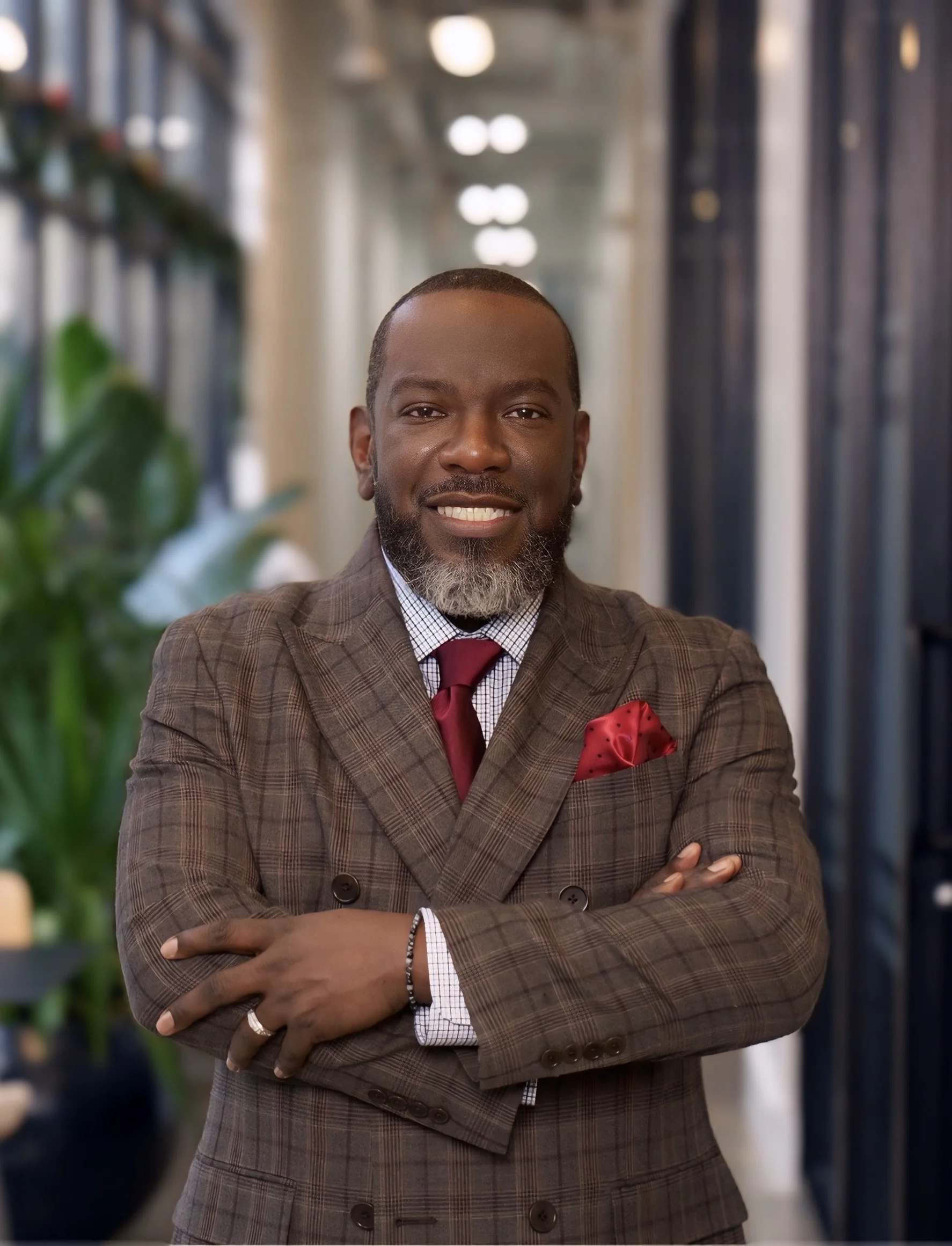
Drew Giddings
Founder & Principal Consultant
Drew Giddings brings more than two decades of experience working with mission-driven organizations to strengthen their capacity for equity and community impact. His work focuses on helping nonprofits build sustainable strategies that center community voice and create lasting change.
Ready to Transform Your Organization?
Let's discuss how equity-centered strategic planning can strengthen your mission and community impact.

