
Key Takeaways
Your nonprofit is ready to launch a capital campaign. The board is energized. The need is real. But between where you are now and a successful multimillion-dollar campaign sits one of the most consequential hiring decisions your organization will ever make: choosing the right capital campaign consultant.
Get it right, and you gain a strategic partner who multiplies your fundraising capacity, keeps your campaign on track, and helps you raise more than you thought possible. Get it wrong, and you burn through precious pre-campaign momentum, waste board goodwill, and potentially set your organization back years.
This guide walks you through exactly how to find, evaluate, and hire a capital campaign consultant who fits your organization -- based on more than 30 years of consulting experience helping nonprofits raise transformative capital.
What Does a Capital Campaign Consultant Actually Do?
Define the core responsibilities and boundaries of a capital campaign consultant so organizations know exactly what they are hiring — and what they are not.
Before you start searching, you need to understand what you are hiring. A capital campaign consultant is not a grant writer. They are not a development director. And they are definitely not someone who will do your fundraising for you.
A capital campaign consultant serves as a strategic architect and accountability partner for your entire campaign. Their job is to ensure every element -- from the feasibility study to the final gift close -- is sequenced correctly, adequately resourced, and aligned with your organization's capacity.
Core responsibilities include:
What a capital campaign consultant does NOT do:
- Make fundraising calls on your behalf (the asks come from your board and leadership)
- Replace your development staff (they supplement and coach)
- Guarantee a specific dollar amount (ethical consultants never do this)
- Run your annual fund simultaneously (that is a separate operation)
Before engaging a consultant, align your board on this distinction: the consultant coaches and strategizes, but your board and leadership make the asks — campaigns fail when organizations expect the consultant to do the fundraising for them.
When Do You Need a Capital Campaign Consultant?
Provide a clear decision framework for determining whether your campaign warrants outside consulting support or can be managed internally.
Not every capital need requires outside consulting support. Here is a straightforward decision framework.
You likely need a consultant if:
- Your campaign goal exceeds $1 million
- Your organization has never run a capital campaign before
- Your development team has fewer than 3 full-time staff members
- Your board has limited major gift solicitation experience
- You need to raise money from donors outside your existing base
- The project has a hard deadline (construction, lease expiration, program launch)
- Internal politics or leadership transitions make objective guidance valuable
You might be able to go without if:
- Your goal is under $500,000 and your donor base is well-established
- You have a seasoned development director who has led capital campaigns before
- Your board already has strong peer-to-peer solicitation skills
- The campaign is essentially an expanded annual appeal from existing major donors
If your campaign goal exceeds $1 million or your board lacks major gift solicitation experience, invest in at least a feasibility study with a professional consultant — it is the highest-ROI campaign expenditure you will make.
Capital Campaign Consultant Fees: What to Expect in 2026
Provide transparent fee ranges, fee structure options, and budget benchmarks so boards can plan campaign consulting costs with realistic expectations.
Cost is the first question every board asks, and the answer depends on the scope of engagement and your campaign size.
Common fee structures:
| Fee Model | Typical Range | Best For |
|---|---|---|
| Monthly retainer | $5,000 -- $15,000/month | Ongoing campaign management (12-36 months) |
| Project-based | $25,000 -- $75,000 | Feasibility studies or planning phases only |
| Flat campaign fee | $75,000 -- $250,000+ | Full-service consulting from planning through completion |
| Hourly consulting | $200 -- $500/hour | Targeted coaching or troubleshooting |
What drives the price:
The ethics of percentage-based fees
The Association of Fundraising Professionals (AFP) explicitly discourages percentage-based compensation for fundraising consultants. If a consultant proposes taking a percentage of what you raise, treat this as a serious red flag. Ethical consultants are compensated for their expertise and time, not for dollars raised. Percentage arrangements create conflicts of interest and can undermine donor trust.
Budget rule of thumb
Plan to invest 5-10% of your campaign goal in consulting and campaign costs (which includes the consultant, campaign materials, events, and administrative support). For a $5 million campaign, that means a total campaign budget of $250,000-$500,000, with the consultant representing the largest single line item.
Budget 5-10% of your campaign goal for total campaign costs and reject any consultant who proposes percentage-based compensation — it violates AFP ethics standards and creates misaligned incentives.
How to Find Capital Campaign Consultants
Identify the four most reliable channels for finding qualified capital campaign consultants and the signals that distinguish proven practitioners from self-promoters.
1. Professional networks and referrals
The strongest leads come from peer organizations that have recently completed successful campaigns. Ask:
- Other nonprofits in your sector who have run campaigns in the last 3 years
- Your regional association of nonprofits or community foundation
- Current major donors who serve on other nonprofit boards
- Your accountant, attorney, or financial advisor who works with nonprofits
2. Professional associations
3. Conference and speaking circuits
Consultants who present at AFP International, BoardSource Leadership Forum, and regional nonprofit conferences are typically established practitioners with proven track records.
4. Published thought leadership
Search for consultants who write about capital campaigns, publish case studies, or maintain educational content. Depth of published expertise is a reliable signal of actual expertise.
Start your search with peer referrals from organizations that recently completed successful campaigns — ask specifically whether they would hire their consultant again, because satisfaction at the end matters more than impressions at the start.
The Capital Campaign Consultant Selection Framework
Walk through a five-step selection process — from scope definition through reference checks — that protects your organization and produces the best consultant match.
Choosing the right consultant requires a structured process. Here is a five-step framework that protects your organization and produces the best match.
Step 1: Define your scope before you search
Before contacting any consultant, your board and executive director should align on:
Document these decisions. They become the foundation of your RFP.
Step 2: Issue a focused RFP (or invitation to propose)
A good capital campaign consultant RFP includes:
Send the RFP to 3-5 consultants. More than 5 creates an evaluation burden that slows decision-making. Fewer than 3 limits your perspective.
Step 3: Evaluate proposals on substance, not polish
When reviewing proposals, weight these factors:
Experience alignment (30%)
- Have they worked with organizations of similar size and type?
- Have they managed campaigns in your goal range?
- Do they understand your sector (faith-based, education, healthcare, social services)?
- Do they describe a clear, phased campaign process?
- Is their feasibility study methodology rigorous?
- How do they handle board and volunteer training?
- What is their approach to major gift strategy?
- Who will actually do the work (the senior partner or a junior associate)?
- What is their current client load?
- How accessible will they be during critical campaign phases?
- Can they provide 3-5 references from similar organizations?
- What were the campaign goals vs. actual results?
- Would past clients hire them again?
Step 4: Conduct chemistry interviews
Narrow to 2-3 finalists and schedule 60-90 minute interviews. Include your executive director, board chair, development director, and campaign committee chair (if appointed).
Questions to ask a capital campaign consultant in the interview:
- Walk us through a capital campaign you managed from start to finish. What went well and what would you do differently?
- How do you handle a feasibility study that comes back with unfavorable results?
- What does your involvement look like during the quiet phase vs. the public phase?
- How do you train board members who are uncomfortable asking for money?
- Describe a campaign that stalled. What happened and how did you get it back on track?
- What is your approach to prospect identification and rating?
- How do you handle disagreements with the executive director or board chair about campaign strategy?
- What does your reporting look like? How often and in what format?
- Who specifically will work on our account? What is their background?
- What does a typical month of engagement look like in terms of hours and touchpoints?
Step 5: Check references thoroughly
Do not skip this step. Call every reference and ask:
- What was the campaign goal and how much was actually raised?
- Did the consultant stay within the agreed scope and budget?
- How responsive were they during critical moments?
- What was the most valuable thing they contributed?
- What, if anything, was disappointing?
- Would you hire them again?
Send your RFP to exactly 3-5 consultants, score proposals using the weighted criteria above, and always check at least one reference the consultant did not provide — the unsolicited perspective is the most honest.
Red Flags That Should Disqualify a Consultant
Catalog the specific warning signs that should immediately disqualify a consultant from consideration, regardless of their credentials or charisma.
Your search should eliminate any consultant who:
Print this red flags list and review it before every consultant interview — a single red flag is reason enough to eliminate a candidate, no matter how polished their presentation.
What the Engagement Should Look Like
Map the five phases of a typical capital campaign consulting engagement — from feasibility study through closeout — so organizations can set realistic timeline expectations.
Once you hire your capital campaign consultant, the typical engagement follows this arc:
Phase 1: Feasibility Study (2-4 months)
The consultant interviews 25-40 prospective donors, board members, community leaders, and organizational stakeholders. They assess:
- Willingness to give and at what level
- Perception of organizational credibility
- Reaction to the proposed campaign case
- Potential campaign leadership candidates
- Competitive fundraising environment
Phase 2: Campaign Planning (2-3 months)
Based on feasibility findings, the consultant helps you:
- Set the final campaign goal and build the gift table
- Finalize the case for support
- Recruit campaign leadership (chairs, honorary chairs, committee members)
- Develop the prospect list and assign cultivation/solicitation strategies
- Create the campaign timeline and budget
- Establish reporting and communication protocols
Phase 3: Quiet Phase (6-18 months)
This is where the real work happens. During the quiet phase, the consultant:
- Coaches solicitors preparing for major gift asks
- Attends or debriefs key donor meetings
- Manages campaign committee meetings
- Tracks progress against the gift table
- Adjusts strategy based on results
Phase 4: Public Phase (6-12 months)
With the majority of dollars committed, the consultant helps:
- Plan and execute the public campaign launch
- Manage broader community solicitation
- Oversee campaign events and communications
- Push toward the final goal
- Begin stewardship planning for campaign donors
Phase 5: Closeout and Transition (2-3 months)
- Final pledge collection strategy
- Donor recognition and stewardship plan
- Campaign accounting and board reporting
- Transition from campaign operations back to annual development
Map the five phases onto your actual organizational calendar before signing a contract — most campaigns take 2-5 years, and underestimating the timeline is one of the most common reasons campaigns stall.
Capital Campaign Consultant vs. Doing It In-House
Provide an honest comparison of consultant-led versus in-house campaigns across seven critical factors so boards can make an informed investment decision.
Some organizations debate whether they need a consultant at all. Here is an honest comparison.
| Factor | With Consultant | Without Consultant |
|---|---|---|
| Feasibility study quality | Independent, confidential, donors speak freely | Staff-led, donors may filter responses |
| Campaign structure | Proven methodology from multiple campaigns | First-time learning curve |
| Board accountability | External partner keeps solicitors on track | Internal dynamics make accountability harder |
| Major gift strategy | Deep experience with high-net-worth donor behavior | Limited to staff experience |
| Cost | Significant investment ($75K-$250K+) | Staff time and opportunity cost |
| Speed | Faster ramp-up, fewer false starts | Longer learning curve, more trial and error |
| Objectivity | Outside perspective on organizational readiness | Internal biases may go unchallenged |
The math usually favors hiring a consultant. Organizations that invest in professional campaign guidance consistently raise more -- often significantly more -- than those that go it alone. The consultant's fee is typically recovered many times over through larger gifts, better prospect strategy, and fewer costly mistakes.
Before deciding to go it alone, calculate the opportunity cost of staff time diverted from annual fundraising and the risk cost of first-time mistakes on major donor solicitations — then compare that to the consultant's fee.
How Giddings Consulting Group Approaches Capital Campaigns
At Giddings Consulting Group, we bring more than 30 years of experience to capital campaign consulting, with a particular focus on mid-size nonprofits and mission-driven organizations.
Our approach differs from traditional capital campaign consulting in several important ways:
Equity-centered methodology. We design campaigns that engage diverse donor communities and ensure that fundraising strategy reflects your organization's values, not just its financial targets.
Board-first philosophy. Before we talk about donor prospects, we invest in your board's capacity to lead. A campaign is only as strong as the board behind it.
Organizational readiness assessment. We do not assume every organization is ready for a capital campaign. Our initial engagement includes an honest assessment of whether now is the right time -- and if it is not, what needs to happen first.
Right-sized consulting. We scale our engagement to your organization's actual needs and budget. Not every campaign requires a 36-month full-service retainer. Sometimes a planning study and quarterly coaching is exactly what you need.
Knowledge transfer. Our goal is to leave your organization stronger than we found it. Every engagement includes capacity building so your team can sustain what the campaign builds.
If your organization is considering a capital campaign, we welcome the conversation -- whether you are in the early exploration phase or ready to issue an RFP.
Your Capital Campaign Consultant Hiring Checklist
Use this checklist to stay organized through your selection process:
- [ ] Internal alignment on campaign purpose, scope, and consulting budget
- [ ] RFP drafted and reviewed by board leadership
- [ ] 3-5 qualified consultants identified and invited to propose
- [ ] Proposals received and scored against evaluation criteria
- [ ] 2-3 finalists selected for chemistry interviews
- [ ] Interview panel assembled (ED, board chair, development lead, campaign committee)
- [ ] Finalist interviews completed with structured questions
- [ ] References checked (including at least one not provided by the consultant)
- [ ] Fee structure and contract terms negotiated
- [ ] Engagement letter signed with clear scope, deliverables, timeline, and termination terms
- [ ] Kickoff meeting scheduled with full project team
Frequently Asked Questions
How long does a capital campaign take from start to finish?
Most capital campaigns take 2-5 years from the initial feasibility study to final pledge collection. Smaller campaigns (under $5 million) tend to move faster. Larger campaigns with construction components or endowment goals often require the full timeline.
Can a consultant work with us remotely?
Yes. Virtual consulting has become standard practice, especially for planning, coaching, and reporting. However, key moments -- feasibility interviews, board retreats, major donor solicitation coaching, and campaign launch events -- benefit from in-person presence. Most consultants offer hybrid arrangements.
Should we hire a solo consultant or a firm?
Both can be excellent. Solo practitioners often provide more personalized attention and lower fees. Firms offer deeper bench strength and specialized team members. The key question is: who will actually do the work day-to-day, and do you trust that person?
What if our feasibility study says we are not ready?
A good consultant will help you understand what "not ready" means and what needs to change. Common readiness gaps include board giving capacity, donor pipeline depth, organizational infrastructure, and case clarity. These are solvable problems -- they just need to be solved before launching, not during.
Can we start without a feasibility study?
You can, but you should not. Skipping the feasibility study is the single most common cause of capital campaign failure. The study is your insurance policy against launching a campaign your community is not prepared to support.
What is a reasonable fundraising goal for a first capital campaign?
There is no universal answer, but a useful starting benchmark is 3-5 times your annual fundraising revenue. If you raise $500,000 annually, a $1.5-$2.5 million capital campaign goal is typically within reach. The feasibility study will refine this based on actual donor capacity.
About the Author
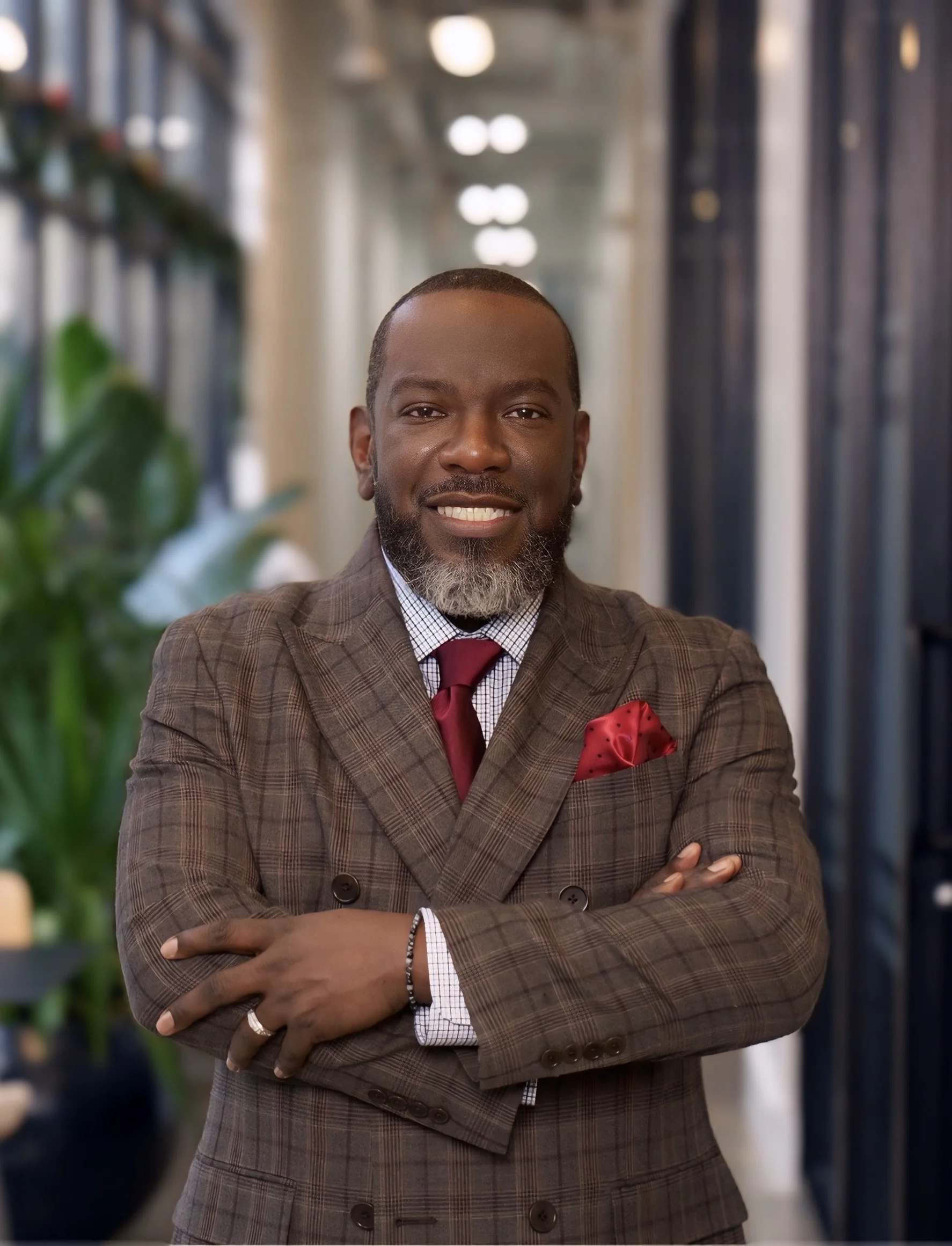
Drew Giddings
Founder & Principal Consultant
Drew Giddings brings more than two decades of experience working with mission-driven organizations to strengthen their capacity for equity and community impact. His work focuses on helping nonprofits build sustainable strategies that center community voice and create lasting change.
Ready to Transform Your Organization?
Let's discuss how equity-centered strategic planning can strengthen your mission and community impact.

